The man who lived underg.., p.1
The Man Who Lived Underground, page 1


Contents
Cover
Title Page
Prefatory Note
The Man Who Lived Underground
Part One
Part Two
Part Three
Memories of My Grandmother
Afterword by Malcolm Wright
Note on the Texts
About the Author
Copyright
About the Publisher
Prefatory Note
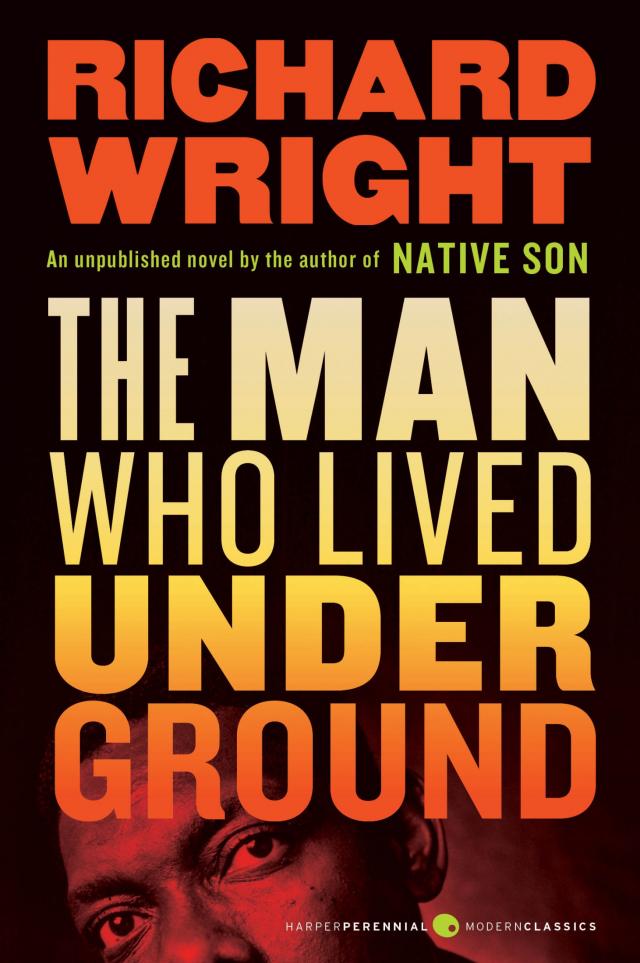
SOME READERS may recognize the title of this novel from the short story of the same name in Richard Wright’s collection Eight Men. Before it was a story, “The Man Who Lived Underground” was the longer work published here for the first time. Recognizing the significance and artistic integrity of the novel as distinct from the merits of the story, the author’s elder daughter, Julia Wright, reached out to the editors at Library of America, publisher of the unexpurgated texts of Native Son and Black Boy (American Hunger), to see whether the novel-length version might be published. The publication of The Man Who Lived Underground, she indicated, should be accompanied by the essay “Memories of My Grandmother,” pointing out that the latter resembled “How Bigger Was Born,” written to explain the genesis of Native Son, and that it was her father’s wish to see the two works published together.
The Man Who Lived Underground was written in an era when lynching and beatings of Black Americans were sufficiently widespread in the United States (not just in the South) to enforce both Jim Crow legislation and unwritten codes of behavior governing interactions between Blacks and whites. Wright’s novel captures this environment of fear, just as it reflects anxieties about the events of World War II then unfolding, when the fate of the world seemed to hang in the balance. Those wishing to learn more about how Wright came to create the work that he believed “stemmed more from sheer inspiration” than anything he had written, and about the many influences on its composition, are encouraged to turn to “Memories of My Grandmother” after reading the novel.
The Man Who Lived Underground
Part One
THE BIG WHITE DOOR closed after him. He pulled his ragged cap low over his eyes, and headed through the summer dusk for the bus line two blocks away. It was Saturday evening; he had just been paid off. A steady breeze from the sea dried his sweaty shirt. Above him red and purple clouds hovered above the edges of apartment buildings. He neared a street intersection, paused, and looked at the slender roll of green bills clutched in his right fist; in the deepening gloam he counted his wages:
“Five, ten, fifteen, sixteen, seventeen . . .”
He walked again, chuckling: Yeah, she never makes a mistake. Tired and happy, he liked the feeling of being paid of a Saturday night; during seven sweltering days he had given his bodily strength in exchange for dollars with which to buy bread and pay rent for the coming week. He would spend tomorrow at church; when he returned to work Monday morning, he would feel renewed. Carefully, so that he would run no risk of losing it, he put the tight wad of crisp bills securely into his right trouser-pocket and his arms swung free. Street lamps blazed suddenly and two lines of lazy yellow gradually converged in the distance before him.
“Mowing that lawn made my hand sore,” he said aloud.
Before him was the white face of a policeman peering over the steering wheel of a car; two more white faces watched him from the rear seat. For a seemingly endless moment, in the balmy air of an early summer night, he stood immobile, his blistered palm uplifted, staring straight into the blurred face of a policeman who was pointing a blinding spotlight full into his eyes. He waited for them to question him so that he could give a satisfactory account of himself. After all, he was a member of the White Rock Baptist Church; he was employed by Mr. and Mrs. Wooten, two of the best-known people in all the city.
“Come here, boy.”
“Yes, sir,” he breathed automatically.
He walked stiffly to the running board of the police car.
“What you doing out here?”
“I work right back there, mister,” he answered. His voice was soft, breathless, pleading.
“Who for?”
“Mrs. Wooten, right back there at 5679, sir,” he said.
The door of the police car swung open quickly and the man behind the steering wheel stepped out; immediately, as though following in a prearranged signal, the other two policemen stepped out and the three of them advanced and confronted him. They patted his clothing from his head to his feet.
“He’s clean, Lawson,” one of the policemen said to the one who had driven the car.
“What’s your name?” asked the policeman who had been called Lawson.
“Fred Daniels, sir.”
“Ever been in trouble before, boy?” Lawson said.
“No, sir.”
“Where you think you’re going now?”
“I’m going home.”
“Where you live?”
“On East Canal, sir.”
“Who you live with?”
“My wife.”
Lawson turned to the policeman who stood at his right. “We’d better drag ’im in, Johnson.”
“But, mister!” he protested in a high whine. “I ain’t done nothing . . .”
“All right, now,” Lawson said. “Don’t get excited.”
“My wife’s having a baby . . .”
“They all say that. Come on,” said the red-headed man who had been called Johnson.
A spasm of outrage surged in him and he snatched backward, hurling himself away from them. Their fingers tightened about his wrists, biting into his flesh; they pushed him toward the car.
“Want to get tough, hunh?”
“No, sir,” he said quickly.
“Then get in the car, goddammit!”
He stepped into the car and they shoved him into the seat; two of the policemen sat at either side of him and hooked their arms in his. Lawson got behind the steering wheel. But, strangely, the car did not start. He waited, alert but ready to obey.
“Well, boy,” Lawson began in a slow, almost friendly tone, “looks like you’re in for it, hunh?”
Lawson’s enigmatical voice made hope rise in him.
“Mister, I ain’t done nothing,” he said. “You can ask Mrs. Wooten back there. She just paid me off and I was on my way home . . .” His words sounded futile and he tried another approach. “Look, mister, I’m a member of the White Rock Baptist Church. If you don’t believe me, call up Reverend Davis . . .”
“Got it all figured out, ain’t you, boy?”
“No, sir,” he said, shaking his head emphatically. “I’m telling the truth . . .”
A series of questions made him hopeful again.
“What’s your wife’s name?”
“Rachel, sir.”
“When is this baby going to be born?”
“Any minute now, sir.”
“Who’s with your wife?”
“My cousin, Ruby.”
“Uh hunh,” Lawson said, with slow thoughtfulness.
“I think he’ll do, Lawson,” said the tall, raw-boned policeman who had not spoken before.
Lawson laughed and started the motor.
“Well, boy, you’ll have to come along with us,” said Lawson, his manner a strange mixture of compassion and harsh judgment.
“Mister, call Reverend Davis . . . I teach Sunday School for ’im. I sing in the choir and I organized the Glee Club . . .”
“You’d better put the bracelets on ’im, Murphy,” Lawson said.
The tall, raw-boned man clicked handcuffs on his wrists.
“Scared, boy?” Murphy asked.
“Yes, sir,” he answered, though he had not really understood the question. He had answered because he wanted to please them. Then he corrected himself: “Oh, no, sir.”
“Where’s your mother and father, boy?” Lawson asked.
“Sir? Oh, yes, sir. They dead . . .”
“Any kin folks in the city?”
“No, sir. Just Cousin Ruby.”
“Come on. Let’s take ’im in,” Lawson said.
His eyes blurred with the first tears he had shed since childhood. The car rolled northward and he noticed that it had grown dark. Yeah, they taking me to the Hartsdale Station, he thought. He had no fear about all this; he looked unseeingly before him, confident that he would eventually give an explanation that would free him. This was a dream, but soon he would awaken and marvel at how real it had seemed. The car swung and turned onto Court Street and sped westward over steel trolley tracks. What would Rachel think when he did not come home on time? She would be worried to death. He was astonished to learn from a big clock in a store window that it was seven. His stomach contracted as he pictured his hot supper waiting for him on the kitchen table. Well, as soon as he identified himself sufficiently at the police station, they would let him go. And later tonight, at home with Rachel, sitting in the easy chair by the radio, he would laugh at this little incident; in telling the story he would hold back the most dramatic parts and make Rachel eager to ask many questions.
The car rumbled on and a ghost of a smile played across his lips. The car’s horn sounded and he remembered where he was. Yes, he had to tell these policemen that he was no thug and that Reverend Davis, his friend, was a public figure in the Negro community. He would make the policemen know that they were not dealing with a stray bum who knew nobody, who had no family, friends, or connections. . . .
“That’s right, boy. Think up a goo
“No, sir,” he exclaimed guiltily. He felt that Lawson’s eyes were an X-ray that could look through his skull and read his thoughts. Then he wailed: “Mister, I ain’t done nothing. Honest to God, I ain’t . . .”
His voice died as the car yammered over the asphalt. The absurdity of his being carted off to jail made him want to laugh, but he checked himself. He was so confident that he could not take this seriously. So far the policemen had not accused him of anything.
“Say, mister,” he began in a high, breaking voice that carried a slight trace of reproach, “what you-all want me for?”
“What did you do with the money?” Lawson countered.
“What money?” he gasped.
“You know what we’re talking about, boy,” Lawson said in a loud voice. “The money you took after you killed ’em . . .”
Panic agitated him. His lips moved several times before words came.
“Killed who?” he wailed. His voice rushed on without waiting for an answer. “Mister, I ain’t killed nobody. Why don’t you go back and ask Mrs. Wooten . . . ?”
“Mrs. Wooten didn’t come home till late today, hunh?” Johnson asked.
“Yes, sir. Like most times I was working there by myself, polishing the car, washing the windows, painting the basement . . .”
“We know all about that,” Lawson said.
He had the terrifying feeling that these men knew what he would be doing at any future moment of his life, no matter how long he lived.
“Here, boy, straighten up,” Murphy said.
He sat up and Murphy pulled forth the roll of bills and counted them.
“Where’s the rest of it?” Murphy asked.
“I ain’t got no other money, mister. I swear I ain’t!”
As the car streaked forward, Murphy inserted the money into an envelope and put the envelope into his pocket.
“Any bloodstains on ’im?” Lawson asked.
Murphy and Johnson examined every inch of his clothing, inspected his fingers, looked at his shoes, and even probed into his hair.
“Did you change clothes today?” Johnson asked.
“No, sir.”
The car pulled into an entrance and came to a sudden halt, throwing him violently forward. Lawson got out of the front seat and slammed the door. Murphy and Johnson dragged him roughly out and pushed him through a crowd of policemen.
“What you got there, Lawson?”
“We’re cracking the Peabody job,” Lawson said.
“He sing yet?”
“Naw. We got to sweat ’im,” Lawson said.
He attempted to twist around and look at the policeman who had asked the questions, but Murphy jerked him forward. He tried hard to read the grim expression on Lawson’s face, but he could make nothing of it. They led him up a short flight of wooden stairs and into a dim hallway. They led him up another flight of narrow winding stairs and pushed him into a small, dirty room that had no window. He stood uncertainly, his eyes wandering about the walls. To his left was a single wooden chair. An electric bulb with a wide green shade swung from the ceiling. The room was filled with a musty, stale odor. In one corner he saw a porcelain spittoon full of slimy mucus. Cigarette and cigar stubs littered the floor.
The policemen unlocked the handcuffs and pushed him into the chair. He watched them pull off their coats and caps and hang them on hooks along the walls. They rolled up their shirtsleeves with leisured deliberation, moving about silently. For a long while they neither spoke to him nor looked at him. Then all three of them came and stood in front of him.
Murphy picked at his teeth with the end of a dirty matchstick.
“I ain’t done nothing!” he said, looking from face to face.
“Come on. Quit stalling,” Lawson said. “Tell us all about it . . .”
“Mister, I swear before God . . .”
Lawson bared his teeth and bent forward quickly and gave his face a resounding slap with the naked, red palm of his hand. A flash of scarlet zipped past his eyes and his entire body leaped with rebellion. His lips felt frozen and numb; as they thawed, they began to ache and sting and bleed.
“Maybe that’ll help you to remember,” Lawson said.
“Mister, for real, I ain’t done nothing,” he mumbled, sobbing.
“What time did you leave Mrs. Wooten’s house?” Murphy asked.
“Just a little while before you-all come along in the car and picked me up,” he whimpered.
“Boy, you know what we mean! We mean earlier today!”
“I didn’t leave earlier today, mister . . .”
“You did! You went next door!”
“No, sir. I didn’t go next door.”
“Didn’t you climb through Mrs. Peabody’s window?”
“No, sir, mister! I ain’t never been over there!”
“Didn’t you go over to the Peabodys’ right after Mr. and Mrs. Wooten left this morning?” Johnson asked.
“No, sir, mister . . .”
Lawson turned to the others.
“He must’ve gone about ten o’clock. The doctor says they’ve been dead for nine hours . . .” Lawson turned back to him. “Now, listen, boy, you may as well tell us. You left about ten, didn’t you?”
“No, sir! Please, mister . . . I don’t know what you talking about . . .”
“What time did Mr. Wooten leave the house this morning?”
“A little before nine, sir.”
“And what time did Mrs. Wooten leave?”
“About nine-thirty, sir.”
“Nobody was in the house with you after nine-thirty?”
“No, sir. I was there by myself. But I didn’t leave.”
“You’re a cool one, aren’t you, boy?” Lawson asked.
“No, sir, mister.”
“You stayed right there in Mrs. Wooten’s house when we were in the Peabody home? You saw us investigating, didn’t you?”
“No, sir, mister! No, sir . . .”
Lawson struck him across the mouth. He cupped his face in his hands and leaned forward, moaning and sobbing. Johnson leaned over him, yelled in his ear.
“What did you use, boy? A hatchet?”
“I ain’t never killed nobody. Nobody . . . I swear, you-all got me wrong, mister.”
Murphy reached above his head and clicked on the electric light and the bright glow shone directly into his eyes. He blinked, his bloody lips hanging open.
“Well, boy,” Lawson said in a low, somber tone, “we’re going to keep you right here until you tell us what you did . . .”
“Mister, I tell you I ain’t done nothing,” he cried, his mouth twisted, tears streaming down his black, wet cheeks.
“All right,” Lawson said. “It’s up to you. If that’s the way you want it, then that’s the way you can have it. Now, just sit there and catch hell . . .”
He stared at Lawson, trying desperately to understand what was happening to him. He was dreaming; yes, that was it, and Lawson was a dream and he was demanding that he do something impossible.
“Which one did you kill first?” Lawson asked.
He leaped to his feet and screamed with all the air of his lungs, “I ain’t killed nobody!”
Johnson pushed him back into the chair.
“Take it easy, boy.”
“You killed Mr. Peabody first so you could have your way with his wife, didn’t you?” Lawson asked quietly.
Horror came into his eyes as he clasped his hands and knotted his fingers; his head wagged aimlessly, as though it had become too heavy for his neck. Every limb on his body shook; sober reason told him to say no, but every muscle in his body urged him to say yes and get free of this nightmare.
“I ain’t never killed nobody,” he said through chattering teeth.
“Where did you hide the money?” Lawson asked.
Curiously, he felt these questions had the power of projecting him into a strange orbit where, though he was not guilty of a crime, they made him feel somehow guilty. He fought against this enveloping mood.
“Mister, I ain’t got no money,” he spoke in a slurred run of words. “Please, call up Reverend Davis . . .”
“To hell with your goddamn Reverend Davis! We’ll make you forget that goddamn preacher yet!” Lawson yelled.
“Please, you-all . . .”
“Answer the questions! When did you kill those two people!”
“Mister, I ain’t done nothing to nobody . . .”
Johnson caught hold of his chair and pulled it into the center of the room, then all three of them resumed their pacing in front of him.